EV Charger Installation
Complete home EV charger installation with circuit design, permitting support, panel evaluation, and clean residential workmanship.
View service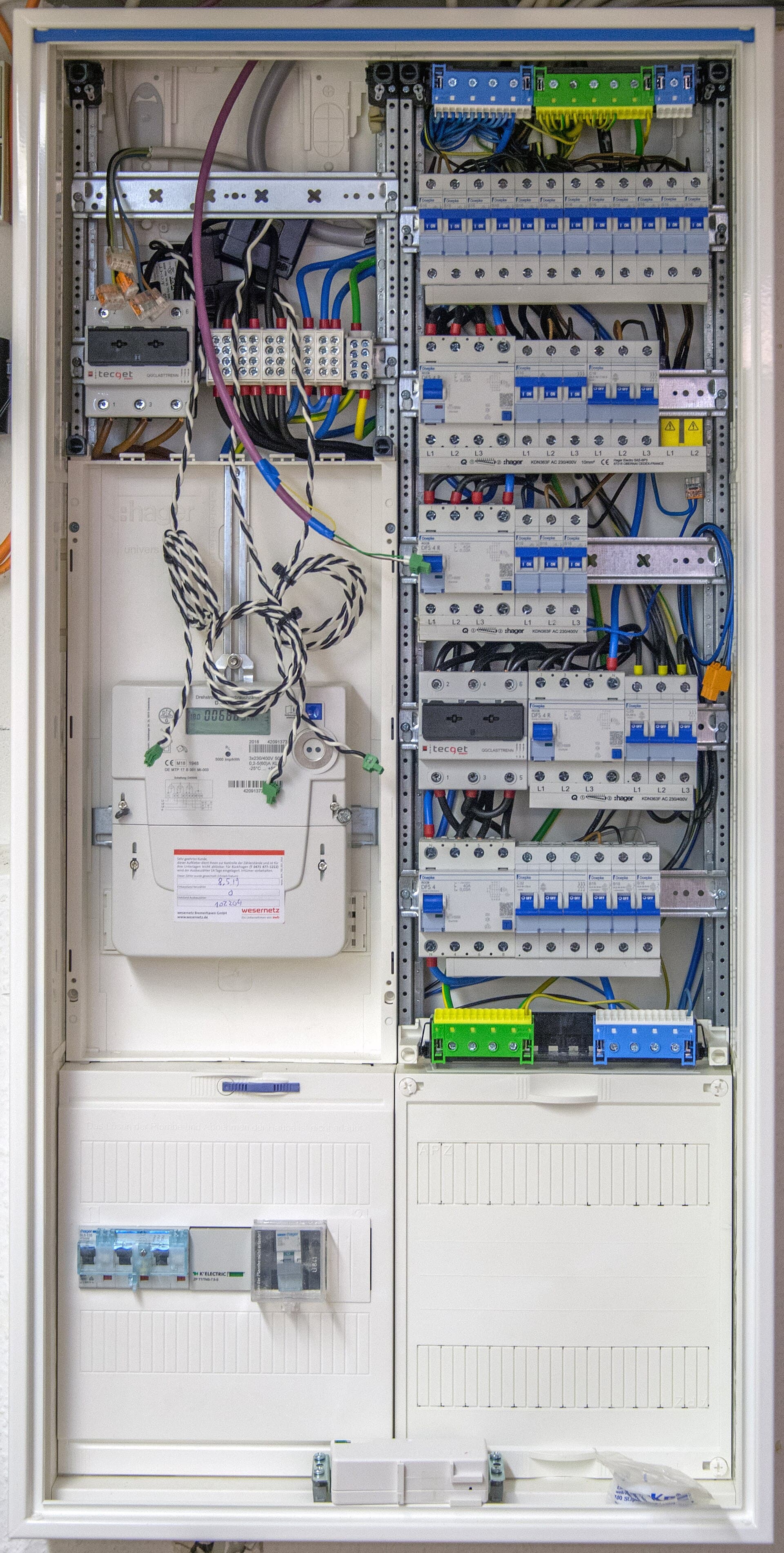
Service & panel capacity
An EV charger is only as good as the panel feeding it. Many homes still rely on 100-amp services or panels that filled up years ago with air conditioning, kitchen remodels, and laundry circuits. Adding a continuous EV load without checking capacity is how breakers chatter, lights dip, or—worse—equipment overheats. A panel upgrade is not a glamorous project, but it is often the honest prerequisite to reliable Level 2 charging.
Homeowners usually arrive at this conversation after a charger quote stalled: “no spare spaces,” “service too small,” or “this panel brand should be replaced.” Those phrases are not sales theater when the equipment is obsolete or fully occupied. They are a fork in the road between forcing a low-amperage compromise and investing in infrastructure that also benefits future renovations.
Upgrades can mean different scopes. Sometimes you need a larger main breaker and new panel interior with modern bus design. Sometimes a subpanel near the garage solves routing without changing the utility service. Sometimes the utility must enlarge conductors to the house—a longer project with different stakeholders. We separate those scopes clearly so you are not buying a “panel upgrade” label that hides a full service change.
This page is about capacity and safety for EV readiness, not about selling a particular wallbox. If your panel is fine, we will say so and point you back to charger installation pages—including our Glendale EV charger installation landing page when you are ready to plan the circuit itself. If it is not, you will understand why, what options exist, how permits and utility steps work, and what timelines look like.
Older hillside homes and mid-century builds deserve extra care: tight basements, Federal Pacific or other problem panels, aluminum branch wiring in places, and renovations that never updated the service. Discovering those issues during an EV project is inconvenient—and also an opportunity to fix a weak point before it fails on a heat-wave evening.
Exploring options? See our full services list or the primary EV charging installation in Glendale overview.
We start with load information and a visual assessment—not with swinging a hammer. Photos, nameplate data, and your planned EV amperage tell us whether a subpanel, main replacement, or utility service upgrade is the right tool.
When utility involvement is required, scheduling becomes a shared calendar with the power company. We explain that early because it dominates the timeline more than the hours spent setting a new can on the wall.
Step 1
Step 2
Step 3
Step 4
Step 5
Sometimes yes. If weekday miles are modest and the panel has a healthy spare capacity calculation, a moderate Level 2 setting can be the smarter spend. We run that comparison honestly. Upgrading is recommended when the service is truly constrained, obsolete, or when you want two EVs without living on the edge.
A panel swap can replace the enclosure and breakers while keeping the same service amperage. A service upgrade increases how much power the utility delivers—often 100A to 200A—and may require new conductors, meter work, and longer coordination. People use the phrases interchangeably; we will not.
Most residential panel changeovers are measured in hours of planned outage, not days, when the scope is contained. Utility service upgrades can involve additional outage windows driven by their schedule. We communicate outage expectations before you clear the fridge calendar.
Yes. Interconnection rules, line-side taps, and inverter breakers must be preserved or redesigned carefully. Bring inverter documentation. We coordinate so EV capacity does not accidentally orphan a solar system that was working.
Panel project pricing spans a wide range because scopes differ. A main panel replacement on an accessible interior wall is not the same invoice as a meter-main relocation on a stucco exterior with utility trenching.
Expect separate conversations for equipment (panel, breakers), labor, city permits, and any utility fees. Online ballpark numbers rarely include Southern California exterior work or outdated grounding electrode systems that must be corrected while the wall is open.
Bundling the EV branch circuit with the upgrade can be efficient: one mobilization, one inspection story, one period of household disruption. It is not mandatory, but it often reduces total calendar chaos.
We provide written scope boundaries—what is included, what is excluded, and what discovery items (rotten framing, illegal prior wiring) would trigger a change order—so “panel upgrade” never becomes an undefined bucket.
Panel and service work requires electrical permits locally. Inspectors examine ampacity, grounding/bonding, working clearances, and whether the installation matches the approved scope. EV readiness is part of the story when the upgrade exists to feed a charger.
Utility companies control meters and service drops. When their assets change, their design review and scheduling rules apply. That is independent of the city permit even though both must succeed for the project to finish.
We help you understand which entity owns which step. Confusion between “city said yes” and “utility scheduled the cutover” is a common source of homeowner frustration—and avoidable with a clear checklist.
For permit-focused residential guidance, also see EV charger permits in Glendale.
A panel replacement without utility service changes can often be scheduled within a couple of weeks depending on permit turnaround and equipment lead times. Adding utility service upgrades can extend the project to several weeks as designs and crew calendars align.
If you need the EV charger immediately for a newly delivered vehicle, we discuss interim charging strategies—such as temporary Level 1—while capacity work proceeds. Temporary is temporary; we will not leave an unsafe “interim” as a permanent secret.
Step 1
Step 2
Step 3
Step 4
A 100-amp service can support an EV in some households with careful load calculation and moderate charger settings. It struggles when electric cooking, multiple HVAC systems, and fast Level 2 charging overlap. A 200-amp service is a common modernization target for homes adding EV charging plus future electrification.
Jumping to 200 amps is not mandatory for every driver. It is a strategic choice when the house is already bumping limits or when long-term plans include more electric appliances. We show the math rather than reciting a slogan.
Long feeder runs to detached garages often deserve a subpanel so EV breakers and future circuits live near the parking stall. That improves maintenance and can simplify conduit sizing compared with pulling every future circuit all the way back to the house.
Subpanels still need correct feeder ampacity, grounding, and working clearance. They are tools, not shortcuts around a saturated main service.
Still deciding?
Call (818) 616-7328 or request a quote—we’ll map your panel and parking to a clear plan.
Mention you are inquiring about electrical panel upgrades. Call (818) 616-7328 or use the form—whichever is easier.